Look up any mountain and you’ll meet two numbers: elevation and prominence. They sound interchangeable. They measure completely different things — and once you know the difference, a lot of confusing mountain trivia suddenly makes sense, like why Kilimanjaro ranks 4th in the world on one list while mighty K2 doesn’t crack the top twenty on it.
Elevation: height above the sea
Elevation is the simple one: how far the summit stands above sea level. Mount Everest’s 8,848.86 m (29,031.7 ft) — the figure Nepal and China jointly announced in December 2020 — is the biggest elevation on Earth, full stop.
But elevation says nothing about what a mountain looks like from nearby. A 4,000 m summit rising from a 3,800 m plateau is a hill you might walk up before lunch. A much “shorter” peak rising straight off a plain can utterly dominate its landscape.
Prominence: how much the mountain rises above everything around it
Prominence answers a different question: how far do you have to descend from this summit before you can climb anything higher? That lowest connecting saddle is called the key col, and the vertical distance from key col to summit is the prominence.
Intuitively: prominence measures how much a peak stands on its own.
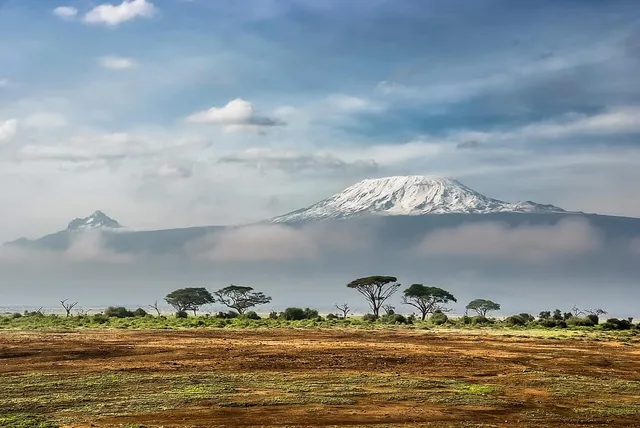
- Kilimanjaro (5,895 m) rises free-standing out of the East African plains, with no higher ground for a very long way — so its prominence equals its full elevation, 5,895 m, the 4th greatest on Earth. That’s why it looks so overwhelming from Amboseli.
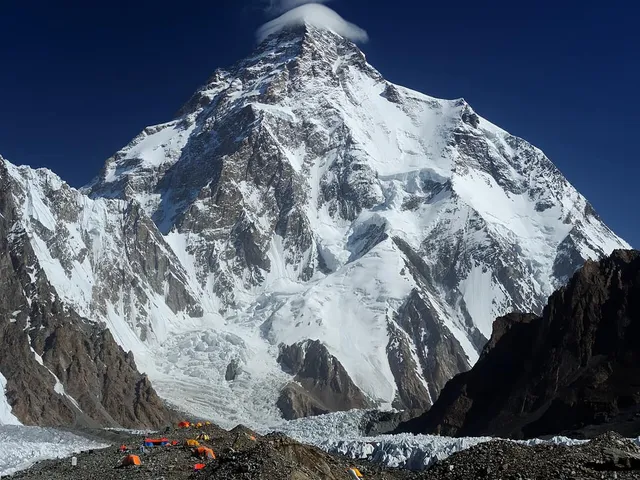
- K2 (8,611 m) is the world’s second-highest mountain, yet it stands deep in the Karakoram among other giants. Its prominence is “only” 4,020 m — you don’t have to descend all the way to sea level before terrain starts climbing toward Everest.
- Denali (6,190 m) pairs big elevation with huge independence: 6,144 m of prominence, third on Earth behind Everest and Aconcagua — which, at 6,967 m elevation, is both the highest peak in the Americas and the second most prominent summit in the world.
And Everest itself? By convention it has no numeric prominence at all — there is no higher terrain anywhere to measure a key col against, so lists simply rank it 1st with a special definition. Even the reference books hedge here, and honest sources keep the hedge.
Why the difference matters when you’re actually looking at mountains
Prominence predicts drama. The peaks everyone recognizes on sight — Kilimanjaro, Denali, Mount Fuji — are high-prominence mountains: they own their skyline. Germany’s Zugspitze is a good contrast: at 2,962 m it’s the country’s highest point and a famous landmark, but with 1,746 m of prominence inside the crowded Alps it reads as the high crest of a range rather than a lone tower.
Prominence also defines what counts as a “separate mountain.” Mont Blanc is 4,805.59 m tall (per the 2023 survey — its summit is a snow dome that genuinely changes height year to year) with 4,696 m of prominence, so it’s unambiguously its own mountain. Many named “peaks” nearby are really shoulders of it, with prominences of a few dozen metres. Peak-list compilers set a prominence cutoff precisely to filter those out.
And it explains the funny league tables. Highest mountain by elevation: Everest. Most prominent after Everest: Aconcagua, then Denali, then Kilimanjaro — a completely different podium, because it’s a different question.
Quick answers to the classic confusions
“What’s the tallest mountain on Earth?” Depends on the ruler. Highest above sea level: Everest. Tallest from base to summit on land: Denali, rising roughly 5,500 m from its lowlands — Everest sits on the already-high Tibetan Plateau, so it “starts” partway up. Both claims are true; they’re just different measurements.
“Is the second-highest mountain the second most prominent?” Not even close. K2 is second by elevation but far down the prominence table; Aconcagua, nearly 1,650 m lower than K2, takes second place for prominence because nothing near it comes close.
“Why do two sources give different heights for the same peak?” Surveys improve and summits change. Mont Blanc is re-measured regularly because its snow dome grows and shrinks; Mount Rainier’s official figure dropped when its icecap high point melted away and the rock rim was resurveyed in 2025. A good source tells you which measurement it’s quoting — and so do we.
The two-number habit
Next time you identify a summit, read both figures together: elevation tells you how high the air is up there; prominence tells you how much of the mountain you’re actually seeing. A 1,345 m peak with 1,345 m of prominence — hello, Ben Nevis — can fill a horizon more convincingly than a 4,000 m shoulder in the Alps.
Every peak result in the app shows both numbers side by side for exactly this reason, and our peak guides carry them for all the famous summits, from Everest to Kilimanjaro.
The real peaks
Genuine photographs of the summits above — so you know what to actually look for: